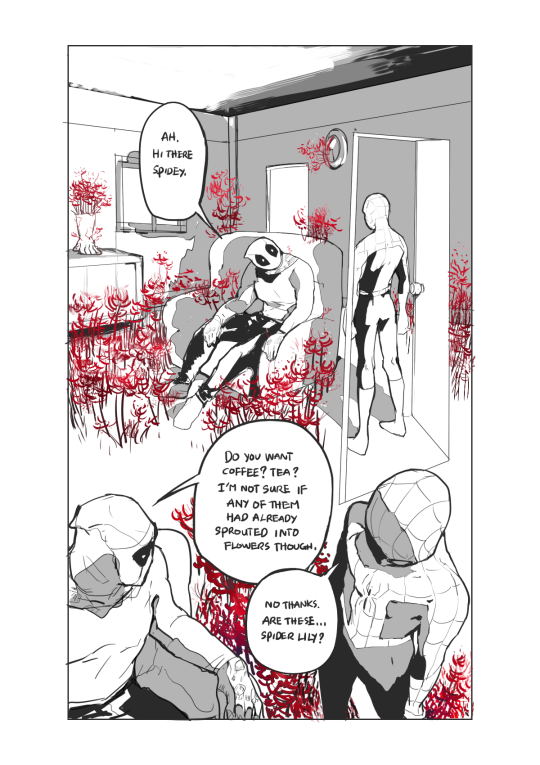
i’ve been procrastinate on this comic for so long i’ve lost interest in continuing it, not to mention that I had to rewrite it many times and I am still not very happy with it, so yeah, im just sorta throw the pages here. More details undercut.
it is responsible, and the mark of a good audience, to critique problematic elements in the media we consume. For example, I love gothic lit – but a lot of it is incredibly sexist and racist. I can acknowledge that these elements are a problem and objectionable while still enjoying the piece for a multitude of other reasons. I can also say to myself “if I ever want to write my own gothic lit, here are some elements I should avoid.” Or, if I do want to tackle the issues of racism and sexism in my future gothic lit, then I can say “I will avoid writing in a way which implicitly or explicitly condones racism or sexism, while still emulating the praiseworthy elements of gothic lit.”
In essence, the fundamentals of intersectional media critique is this: “these elements of [x media] are problematic and we should rethink them in future media, both as audiences and as creators.” By rethinking these elements, I don’t mean utterly doing away with them, but rethinking how we approach them and how we read them.
We enter purity culture when our statement moves from “these elements of [x media] are problematic and we should rethink them in future media, both as audiences and as creators,” and becomes “these elements of [x media] are problematic and therefore anyone who consumes or creates [x media] is condoning everything about [x media].” The implication here is that, if one wants to be a good person, one should avoid [x media], because to do otherwise is to either implicitly or explicitly condone everything in [x media]. This type of attitude towards media is very common in conservative religious circles.
It moves fully into censorship when the statement moves from “these elements of [x media] are problematic and therefore anyone who consumes or creates [x media] is condoning everything about [x media]” and becomes “these elements of [x media] are problematic and therefore nobody can consume or create [x media] for any reason.” Those who break this rule are seen as evil and shunned. This type of attitude toward media is very common in fundamentalist circles.
A culture of censorship is the natural outcome of purity culture, because purity culture by its very nature seeks purity until even the whisper of objectionable content, in any context, is suppressed.
I would wager a guess that many people who are against anti culture are familiar with either these toxic conservative or fundamentalist attitudes towards media, and we are alarmed by their striking similarity with antis’ attitudes towards media. It is most certainly why I am against anti culture.




 a paper mache bucket ... tumblr mirror